Powering the Future With Renewable Energy
Harnessing inexhaustible elemental forces—sun, wind, water, and geothermal earth heat—to displace carbon-intensive coal and fossil fuels permanently.
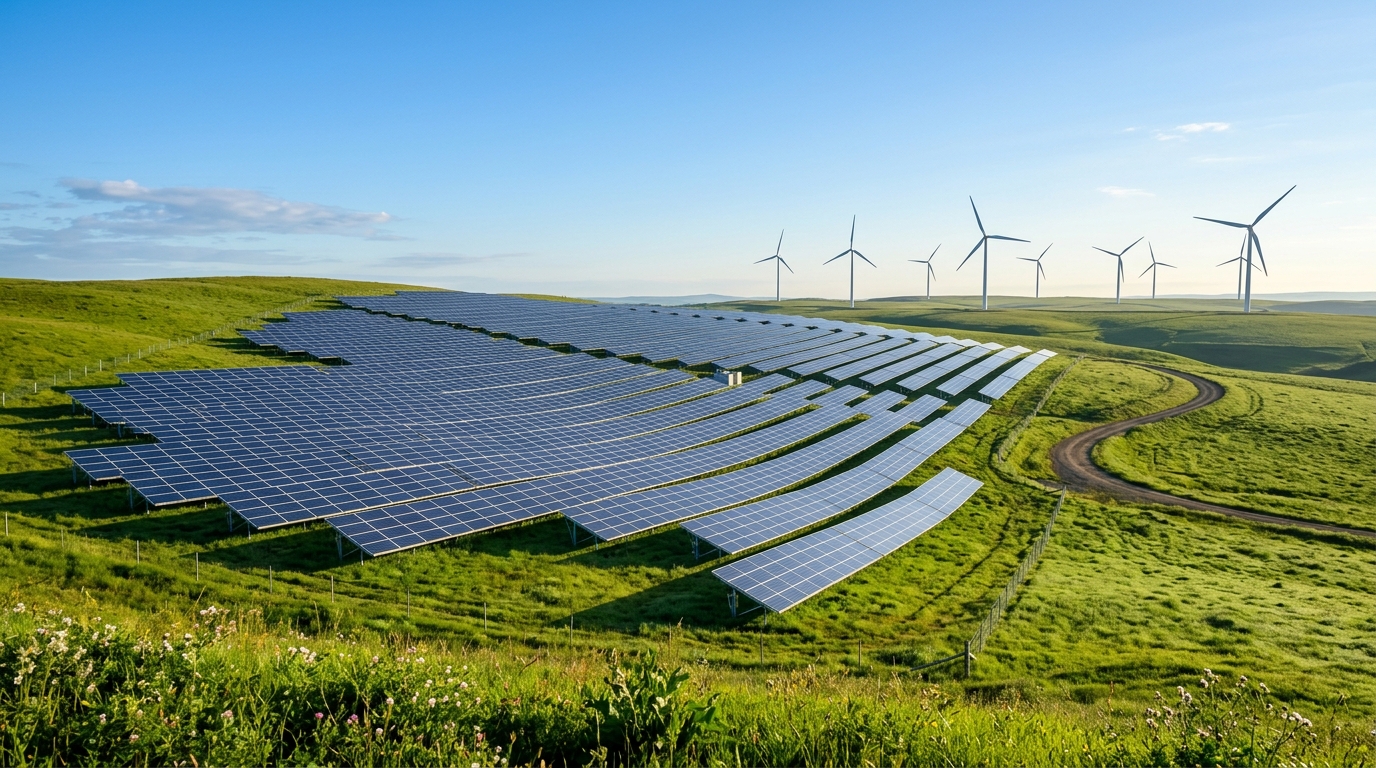
Enough sunlight strikes the Earth in 90 minutes to power all human activity for an entire year.
The Five Core Renewable Sources
Each technology offers distinct geographic strengths and baseload capabilities.
Solar Energy (Photovoltaic)
Silicon semiconductor wafers convert photon packets directly into DC electricity. Rooftop panels and utility-scale solar farms provide decentralised resilience.
Efficiency: Commercial panels now reach 21–24%.
Lifetime: 25–30+ years with negligible maintenance.
Wind Energy
Aerodynamic composite turbine blades drive high-ratio gearboxes or direct-drive alternators. Offshore winds offer strong, consistent capacity factors above 50%.
Capacity: Modern offshore turbines generate 14–16 MW each.
Footprint: Co-exists with agricultural grazing lands.
Hydropower
Harnesses kinetic energy from flowing rivers and reservoir head pressure through hydraulic turbines. Provides instantaneous load balancing and grid storage.
Pumped Hydro: World’s largest energy storage battery.
Run-of-River: Low environmental impact on fish habitats.
Biomass & Bioenergy
Converts agricultural residues, forestry waste, and bio-methane from wastewater into heat, green gas, and sustainable aviation fuels.
Circular: Utilizes organic waste streams otherwise dumped.
Baseload: Can run continuously regardless of weather.
Geothermal Energy
Taps subterranean steam and superheated brine from tectonic fissures miles underground to spin steam turbines 24/7/365 with zero fuel combustion.
Reliability: 95%+ capacity factor (ideal baseload).
Heat Pumps: Shallow geothermal heats buildings efficiently.
Smart Grid & Battery Storage
Large utility-scale lithium iron phosphate (LFP) and sodium-ion battery arrays capture daytime solar peaks and night wind surges for on-demand dispatch.
Residential Solar & Carbon Savings Estimator
Estimate how much money and atmospheric CO₂ a rooftop solar array can offset.
System Size
--
Est. Annual Savings
--
CO₂ Offset
--
Tree Equivalent
--
The Triple Dividend: Climate, Health, and Economy
The transition to 100% renewable energy isn't just about curbing greenhouse gases—it brings immense health and economic benefits by eliminating toxic particulate soot (PM2.5) that causes over 5 million respiratory deaths per year.
The 2050 Clean Energy Horizon
According to the International Energy Agency (IEA), reaching net-zero carbon requires renewable sources to supply 90% of global electricity by 2050, accompanied by a 4-fold increase in cross-border high-voltage DC supergrids.